Field note
Photographing Prints and Type Without a Studio
Lighting, angles and the honest limits of a desk setup
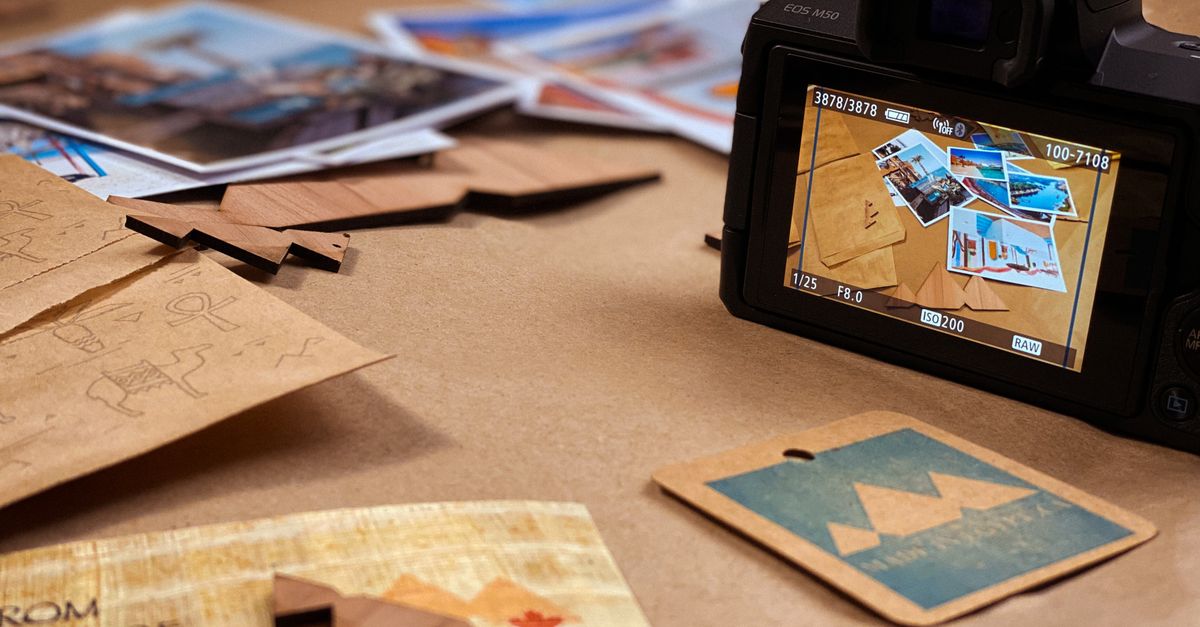
Most of the prints I photograph get shot on the same table I use for everything else, next to a window that faces a courtyard. There is no softbox, no backdrop stand, no second light. What makes the pictures usable is not the gear but the decision to work with one light source and stop pretending the setup can do more than it can.
A single window with a sheet of tracing paper taped over it will show paper grain and the relief of a deep impression far better than a flash ever will. Flash flattens everything, kills the shadow that sits inside a letterpress bite, and turns a cotton sheet into a smooth grey rectangle. Daylight through a diffuser keeps that shadow, and the shadow is the whole point.
Where the camera goes
Place the sheet near the window, not across the room from it. The camera sits roughly parallel to the paper for a straight-on record shot, but the more useful angle is a low one, maybe twenty degrees off the surface, raking across the sheet. From there the texture of the stock and the slight lift of ink on a risograph pass become visible. A flat overhead shot hides all of it.
Keep the sheet flat without pressing it down hard. A couple of small weights at the corners, or a strip of low-tack tape on the back, holds the paper steady without crushing the impression you are trying to show. If the paper curls, let it settle for a few minutes rather than forcing it.
The grey card, and why it saves time
Put a grey card in the first frame of every session. Window light shifts through the day and your eye adjusts without telling you, so a white sheet photographed at ten in the morning and again at four will come out looking like two different papers. The grey card gives you a fixed reference to correct against later, and it takes ten seconds to include.
What a desk setup cannot do
Some details are simply beyond what this kind of setup can capture, and it is worth knowing where the line sits. Very fine hairlines in a light ink, the exact colour of a pale risograph layer, and the sheen on a coated stock are all difficult without controlled light and a proper colour target. When a detail matters that much, the honest answer is to find a studio or a photographer with the right setup rather than keep pushing a window and a phone.
For everything else, the desk works. It is slow, it depends on the weather, and it will never look like a catalogue. That is fine. The prints do not look like a catalogue either.