How It Starts

The first session in a small print studio is mostly handling, not printing. These are the stages that come before anything finished exists.

  1. Stage one

    Sorting a case of metal type

    You open the case and go through it sort by sort, pulling worn letters and checking that the compartments still match the layout. Nothing gets set until you know what is actually in the case and what is missing.

  2. Stage two

    Setting a single line by hand

    One line in the composing stick, spaced and justified until it sits tight without forcing the spaces. It is slow work, and the slowness is where you learn to read the stick as you build it.

  3. Stage three

    Choosing paper by weight and surface

    Not by brand. A soft cotton sheet takes a deep impression and holds hairlines; a hard-sized stock can crush the type and leave a halo of ink around every letter. Grain direction matters the moment you fold a cover.

  4. Stage four

    Mixing ink in small batches

    On a glass slab, a little at a time, adjusting until the colour reads right on the sheet rather than on the knife. Small batches mean you can afford to be wrong and start again.

  5. Stage five

    Pulling the first proof

    The first pulls are not the print. They are how you judge pressure and registration, and how you spot a loose quoin or uneven word spacing before the ink goes down properly.

  6. Stage six

    A test sheet on the risograph

    Before a run, one sheet goes through to see how the drum handles the chosen stock. Registration drifts a millimetre or two between passes, and the test tells you how much margin to leave.

The misprints and the cleanup are part of the subject, not an interruption of it. Most of what gets written here comes out of these stages rather than the finished sheet.

What the first weeks actually give you

Nobody hands you a finished print on day one. The early sessions are about learning how type, paper and ink behave under your own hands, and what that means for the work you eventually want to make.
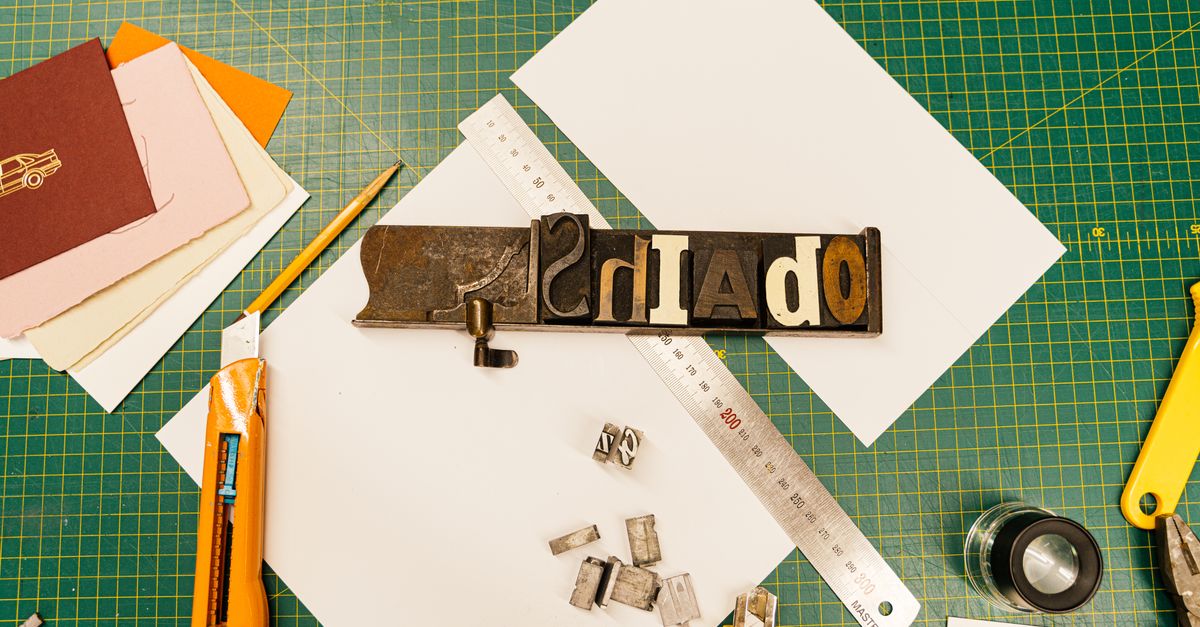
Hunter Ashworth: how it starts

If you want to see how these steps turn into finished pieces, the use cases walk through real studio work, and the resources page collects the reference notes behind them.

  • You learn to read a case of type

    Sorting a case means checking each sort for wear, nicks and short counts. That habit carries into every job: you spot a bad letter before it reaches the press instead of after.

  • Paper stops being a guess

    Weight, surface and grain direction decide how a sheet takes ink and how it folds. Choosing by feel and test pulls, not by brand name, is the shift that matters.

  • Ink mixed in small batches

    Mixing on a glass slab in small amounts keeps waste low and lets you adjust tone between pulls. You start judging colour by what the roller actually deposits.

  • First pulls judge pressure

    The early sheets are not the print. They tell you whether the impression is even, whether registration holds, and where the forme needs another adjustment.

  • Risograph starts with a test sheet

    Before a run, a single test sheet shows how the drum handles the chosen stock. Drift and roller marks become something you plan around rather than fight.

  • Cleanup is part of the work

    Washing up, re-sorting type and logging what failed are treated here as the real subject. The misprints usually teach more than the clean sheets do.

How to reach the writer

There is no booking desk and no queue system. If a note on this page raised a question about type, paper or ink, write directly and it lands in the same inbox as everything else.

Questions about a specific post, a supplier list or an open studio day are all fine. So are corrections, especially when a technique described here behaves differently on your own press.

Postal address

The Mills, 66 Carr Street,
Newtown, Johannesburg, 2001,
South Africa

Before you write

Mention the press or stock you are working with, and what the print actually did. A short description of the problem is more useful than a long one.

Supplier and studio lists

The running lists of local suppliers and open studio days live on the resources page, updated when something changes rather than on a schedule.

Read the resources

Common questions

Most recurring questions about first sessions, tools and materials are already answered in the guide center. Worth a look before sending a note.

Open the guide center

Replies come when they come. This is a slow blog run alongside workshop time, not a support line.